Breaking stigmas around male pleasure. Expert advice on stamina training, prostate health, and ergonomic design.
The Inner Circle
Unlock 15% Off
Join our newsletter for expert intimacy tips, discreet guides, and exclusive member-only offers.
In the bedroom, timing is everything. One of the most common concerns for men is stamina — and the most effective technique for building it is also one of the oldest: edging.
This is the hands-on guide. If you want the physiology behind why it works — the arousal scale, the point of no return, the nervous-system mechanics — read our science of stamina training. Here, we focus on exactly how to do it.
What Is Edging?
Edging (also called "surfing") is the practice of bringing yourself close to climax, then deliberately stopping before the point of no return (PONR), letting arousal subside, and repeating the cycle.
It is called edging because you are circling the edge of climax without falling over it.
The technique has ancient roots — Taoist texts describe it as "riding the tide" — but modern sex researchers validated it in the 1950s as a treatment for premature ejaculation. Today it is the backbone of stamina training for men.
What edging builds:
Control — you learn to recognize the approach of climax earlier and earlier.
Endurance — repeated cycles extend how long you can stay highly aroused.
Stronger finishes — a delayed climax is almost always more intense when it arrives.
Confidence — control in practice translates directly to control with a partner.
Before You Start: Learn Your Arousal Scale
Edging only works if you know where you are on the ride. Before your first session, take one practice run where you do nothing but observe:
1–3: Relaxed, barely aroused.
4–6: Warm, engaged, building.
7–8: The training zone. Full arousal, but you can still pull back.
9: The point of no return — too late.
The entire skill of edging is learning to feel the difference between 7 and 9. Most beginners discover they were stopping far too late.
Solo Edging: A Step-by-Step Session
Here is a full training session, step by step. You will need lube (see our water vs. silicone guide if you need to stock up) and a trainer — we recommend The Orca, and we will explain why below.
Set up. Relaxed environment, no time pressure. Apply a generous amount of water-based lube — dry friction muddies your arousal feedback and encourages the death-grip habit (more on that in our death grip guide).
Build slowly. Start with slow, light stimulation. Focus on your breathing: deep, slow, even.
Call the number. When you reach 7–8 on your scale, stop all stimulation. Hands off completely.
Cool down. Wait 30–60 seconds. Breathe. Actively release your pelvic floor — the exhale you use to finish urinating is the release you want. Let arousal drop to about 5.
Resume. Start again, slower than before. The second climb is where the training happens.
Repeat the cycle 3–5 times.
Finish or don't. On the final cycle you may climax — or you may choose not to. Both are valid; the session is training either way.
How often: 3–4 sessions per week. Consistency beats marathon sessions, and daily edging with no release can leave you frustrated rather than trained.
Why The Orca Is Built for This
Most men practice edging with their hand, and the hand is the problem: you can change speed and pressure without noticing, and when you are close, "stopping" a clenched fist is slower and sloppier than stopping a tool.
Ergonomic palm grip — it sits in your hand like a computer mouse, and opening your hand stops the stimulation instantly. That instant release is the difference between stopping at 8 and accidentally crossing 9.
Open-ended design — no sealed chamber, so there is no suction pressure or tight grip to skew your baseline.
Textured inner channel — consistent, repeatable texture gives your nervous system honest feedback every session.
Perineum vibration mode — a second stimulation channel to practice managing: when the edge is close, switch from texture to vibration, or vice versa. Managing two inputs is advanced edging.
Discreet tech design — it looks like a gadget, not an anatomy lesson.
Partner Edging: Turn Control Into a Game
Edging is not a solo sport. With a partner, it becomes one of the best communication drills a couple can do.
The setup: your partner provides the stimulation, and your only job is to report your number — "six... seven... seven and a half..." — honestly. When you call eight, they stop. When you drop to five, they resume.
Why this is powerful:
She learns your signals — breathing changes, muscle tension, the look on your face — and becomes a better lover in the process.
You learn to communicate mid-arousal, which is harder than it sounds.
She gets more time. The longer you ride the edge, the longer the session — and anticipation is its own reward.
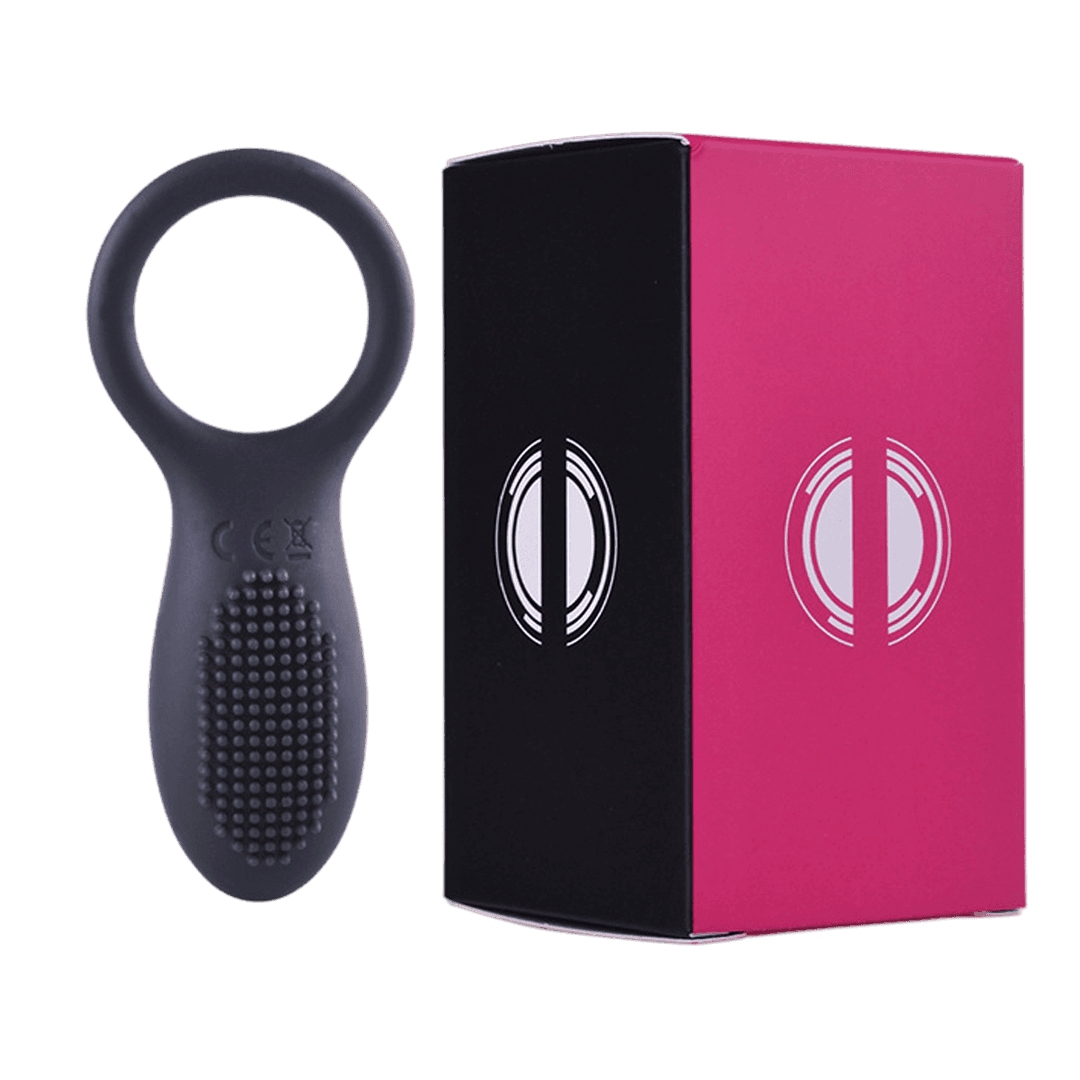
For partner sessions, add The Bond. A cock ring restricts blood outflow, which helps you maintain firmness during the cool-down pauses — so stopping does not mean losing the erection. The Bond's vibrating element also gives her direct clitoral stimulation while you focus on your rhythm. Win-win.
Common Edging Mistakes
Stopping at 9. If you wait until the very edge, you will cross the PONR by accident. Stop at 7–8, not 9.
Rushing the pause. Wait at least 30 seconds. Resume too early and the sensation climbs straight back to the edge.
Edging with a death grip. Tight, dry, high-pressure edging raises your threshold and makes partner sex feel muted — the exact opposite of the goal. Lube and light pressure only.
Escalating with porn. Edging while escalating porn use trains the wrong stimulus. Keep the inputs simple.
Holding your breath. Deep, slow breathing is what lowers arousal. Tension raises it.
Practicing daily with no release. Frustration builds. 3–4 focused sessions a week is the sweet spot.
Frequently Asked Questions
Does edging actually work?
Yes. It is the behavioral core of premature ejaculation treatment and has been validated in clinical settings since the 1950s. The mechanism is simple: repeated exposure to the edge teaches your nervous system to recognize and manage it.
How often should I practice edging?
3–4 sessions per week is ideal. Daily practice adds frustration without adding results, and sessions under 10 minutes are too short to build the skill.
Is it bad to edge without finishing?
No. You may feel a brief, mild ache afterward — sometimes called "blue balls" — but it is harmless and passes within an hour or two. It is not a sign of damage.
Can edging help premature ejaculation?
Yes — it is one of the most effective techniques for it. Pair it with breathing work and reverse kegels for the fastest progress. If you want the full training plan, see our science of stamina training.
How long until I see results?
Most men notice better control within 2–3 weeks of consistent practice. Meaningful, lasting change typically develops over 2–3 months.
Is edging safe?
For the vast majority of men, yes. The one caution is the grip: edging with a tight, dry grip can contribute to desensitization over time. Use lube and a light hold.
Conclusion
Edging is the oldest stamina technique for a reason: it works. It trains recognition, builds endurance, sharpens communication, and makes the finish measurably better.
Start solo with The Orca. Learn your scale. Then hand the controls to your partner and watch the skill transfer.